Working with Industry
Core Capabilities in Contract Research
The main focus of the centre is to develop innovative pharmaceutical formulation technologies and to help commercial partners overcome challenging formulation problems.
Our pharmaceutical formulation development activities are focused on enhancing solubility, stability, compatibility and effectiveness of challenging active molecules with expertise in
- Preformulation analysis
- Pharmaceutical formulation development
- Poorly soluble drugs
- Amorphous forms
- Melt technologies
- Co-crystals
- Polymorphic tansitions and stability of novel polymorphs
- Particle size reduction
- Oral dosage forms
- Transdermal drug delivery
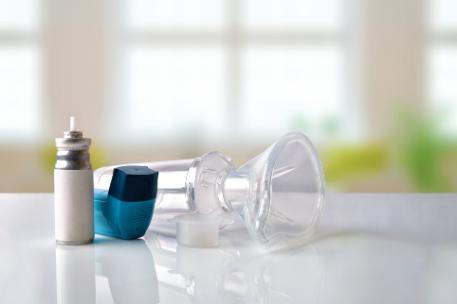
- Inhaled drug development
Find out more
Get in touch with Head of Business Engagement Jason Jones to discuss options for working together.
Preformulation Analysis
Preformulation studies on a new drug substance are the foundation of developing a robust, safe and effective drug product formulation. The investigation will generate information on the physicochemical properties of the substance that will allow the formulator to:
- Increase Stability-physical and chemical
- Enhance Bioavailability-solubility/permeability
- Improve compatibility- with excipients and in the processing environment
Scientists at CPES can perform a range of investigations including:
Solid Form Screening
- Salts
- Solvates and hydrates
- Polymorphs
- Amorphous Forms
- Co-crystals
Solubility Studies
- Solubility
- Dissolution rates
- Partition Coefficient (Log P)
- pKa Solubility profiles
- Common Ion effects
Bulk Powder Properties
- Particle Size/Morphology
- Surface Area and Surface Energy
- Hygroscopicity
- Powder Flow Properties
- True Density
Stability Studies
- Solid State Stability
- Solution Stability
- Excipient compatibility
Pharmaceutical Formulation Development
With many years of industrial experience, academic expertise and a range of enabling and proprietary technologies CPES offers a range of commercial pharmaceutical formulation development services unmatched by many CRO’s.
Our Aim
- Is the development of robust and compliant formulations for our clients.
- To resolve difficult challenges encountered during preclinical and clinical development.
With immediate access to an impressive range of supporting preformulation analytical equipment the centre can ensure full characterisation of the active and final dosage forms and a rapid turnaround of results. We offer development services for a number of dosage forms including oral (liquid and solid), transdermal, nasal and inhaled.
Poorly Soluble Drugs
Currently about 40% of drug development candidates and approximately 70% of new drug leads have low aqueous solubility. Poor solubility creates drug delivery challenges such as erratic absorption and low oral bioavailability. CPES has a range of enabling technologies that can be used to design a formulation that will enhance the solubility of your active.
We can investigate a number of approaches:
- Amorphous Forms
- Co-crystals and novel polymorphs
- Micronisation and Nanoprocessing
- Complexation
- Liposomes
- Micelles
Amorphous Forms
Most drug candidates in pharmaceutical development are highly pure and in a thermodynamically stable crystalline state. However upon initial isolation the active may be obtained in a fully or partially amorphous state, which possesses physical properties different from their corresponding crystalline state. Solid state modification from crystalline to amorphous can be a viable approach for enhancing drug dissolution and thus bioavailability. However, the high internal energy and specific volume of amorphous state relative to crystalline means that during processing or storage the amorphous state may undergo devitrification. Hence, amorphous solids require stabilization, it is common practice to prepare a dispersion in a pharmaceutically-acceptable polymer in order to achieve a stable form. Typically, amorphous forms are prepared via melt extrusion, spray or freeze drying.
Hot Melt Extrusion
Hot melt extrusion (HME) processing represents an excellent technique to prepare amorphous API formulations for pharmaceutical products with an increased active dissolution rate leading to enhanced bioavailability.
CPES are experts in HME with many years of experience in developing new pharmaceutical formulations and have a large range of laboratory scale equipment and a clean room facility. We also have relationships with CMO’s and can transfer processes for clinical manufacture.
Co-Crystal Screening, Characterisation and Scale-up
Identification of the optimized solid form of an API, was previously restricted to the free active or it’s salts. However, today we can add the option of co-crystals which is a form that consists of two or more components that are solid at room temperature but different from salts in that no proton is transferred from the acidic to the basic functionality.
Co-crystals have different physico-chemical properties than the free active or salt, such as dissolution rate, solubility, melting point, chemical stability and hygroscopicity, and hence can exhibit more desirable critical quality attributes. We have vast knowledge and experience in the discovery of co-crystals and can screen co-formers to identify potential co-crystals via a number of methods, many of which we can perform at a larger scale. Following co-crystal identification our team can characterise and determine it’s physico-chemical properties identifying the benefits over the free drug or salts.
Stable Novel Polymorphs
Polymorphs are chemically identical, but have different crystal lattice energies, melting points, intrinsic solubilities, rates of dissolution, densities, mechanical properties, chemical and physical stability, hygroscopicity, etc. Polymorphism has implications in biopharmaceutical properties, formulation/processing aspects and intellectual property considerations.
The different intrinsic solubilities may lead to differences in the rate of absorption – i.e. have therapeutic implications.
Scientists at CPES have developed novel methods to prepare metastable polymorphs that do not convert back to the thermodynamically stable polymorph over a long period of time under accelerated storage conditions. The stable polymorph has been shown to have desirable quality attributes and may be used to develop a superior drug product.
Particle Size Reduction
Particle size reduction provides a number of attractions to the pharmaceutical formulator for the enhanced delivery of drugs with low aqueous solubility, primarily it markedly increases in surface area to volume ratio.
- Small Scale Micronisation: CPES offers lab scale micronisation minimum requirement c.2g.
- Nanocrystal-processing: Wet Bead Milling or High Pressure Homogenisation; Preparation of liquid /solid dosage forms of crystalline nanoparticulate suspensions/solids.
CPES can offer access to proven, cost effective, rapid and consistent particle size reduction technology that has been shown to produce crystalline nanoparticles (in the range 200-400nm) in aqueous suspension. Controlled stability studies have proven that the suspensions are stable over a period of 6 months. The nanoparticles have successfully been incorporated into solid dosage forms to provide enhanced in-vivo dissolution and absorption for drugs with low aqueous solubility.
Oral solid dosage forms
CPES offers expertise and modern laboratory formulation and analytical equipment for the development of conventional solid dosage forms including:
- Granules
- Powders
- Tablets
- Capsules
- Pellets
Our bespoke service includes:
Preformulation analysis
- Structural and Molecular Analysis
- Thermal analysis
- Chromatographic Analysis
- Powder and particle characterisation
Laboratory Scale Processing Techniques
Blending/Mixing
- Planetary Mixing
- Turbula Mixing
- Sifting
Particle Size Reduction/Milling
- Micronisation
- Nanoprocessing
Solid Dosage Form processing
- Granulation
- Melt Granulation
- Tabletting
- Coating
Extrusion Technologies
- Hot Melt Extruded tablets and pellets
- Injection and Micro moulded tablets
Solids Isolation Technologies
- Spray dried powders
- Freeze dried powders
Final Dosage Form Testing
- Physical Characterisation
- Disintegration/Dissolution studies
- Active purity, content and uniformity analysis
- Stability testing
Transdermal drug delivery
CPES offers expertise in the development of novel transdermal formulations. In conjunction with the Centre for Skin Science, Ethical Tissue and the Centre for Chemical and Structural Analysis based at the University of Bradford, CPES scientists have experience in the development of a range of standard and novel formulations for transdermal drug delivery.
Standard Topical Formulation Development
- Creams
- Gels
- Ointments
Transdermal Drug Delivery Systems
- Transdermal patches
- Lypotropic Liquid Crystal Systems
- Microneedles
- Liposomes
Analysis
- Franz cell analysis, 3-D Raman Microscopy API studies on skin samples, HPLC, LCMS/MS, prep HPLC systems
- Full stability studies on optimized formulations
Natural Product Based Systems
- Experience and expertise with natural product development including novel delivery systems.
- Expertise in analytical methods for identifying active components in natural products using LCMSMS methods.
Inhaled Drug Development
Inhalation is the most effective route of drug administration for treating diseases of the respiratory tract. This route ensures that drugs are delivered directly to their site of action where they exert the required local effect. The three main inhalation approaches include the use of metered dose inhalers (MDIs), dry powder inhalers (DPIs) and nebulisers.
CPES offers inhaled formulation development services for DPI and Nebulised formulations:
Our structured approach to DPI formulation development includes:
- Analytical Method Transfer
- Particle Size Reduction and Preformulation analysis on API
- Blending and content uniformity analysis
- Next Generation Impactor (NGI) analysis on DPI
- Stability testing of micronised and blended API
- NGI studies on stored materials
Our structured approach to Nebulised formulation development includes:
- Selection of nebuliser devices for the study
- Analytical Method Transfer
- Next Generation Impactor Testing
- Aerosol Output study
- Variation in Concentration study
- Solution stability testing